
Systems Thinking and Human Error Unravelled - Why We Are Brilliant, Yet so Easily Get Things Wrong
By Phil Gilling, Director of Learning and Development, G.R.I.T.
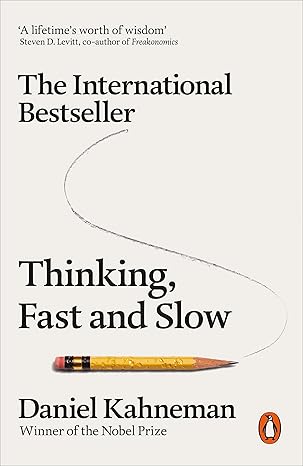
A few years ago, I was introduced to the concepts of System Thinking by Daniel Kahneman and his book ‘Thinking Fast and Slow’. His concepts were a revelation to me, and it finally made sense why, in many ways, I felt skilled and confident, and yet I could easily become confused and get the simplest things wrong. To explore this issue, we need to first look at the fundamental way our brains have evolved.
Three Brains? As mammals, our brains have evolved to effectively become an amalgamation of three brains – or the “Triune Brain”. The 3 elements have the following characteristics and form the System 1 and 2 elements as described by Daniel Kahneman:
System 1. Fast, intuitive and emotional thinking
1. The Reptilian Brain. This is the oldest and most primitive part of the brain, having evolved from reptiles, and is also known as our ‘Dinosaur Brain’. This part is responsible for our basic survival instincts and automatic reflexes of fight, flight, and freeze. The reptile brain also contains the autonomic functions that keep us alive, such as breathing, heart rate, body temperature, and balance. The reptile brain has our hard-wired behaviours. This gives us our actions that require little conscious thought, or System 1.
2. The Limbic System. This sits on top of the reptilian brain and includes elements responsible for our emotions, including the amygdala, and our long-term and emotional memories (hippocampus). The limbic system developed with early mammals and provides us with far more complex social and emotional responses than reptiles. This explains why most people prefer to interact with mammals such as dogs, cats and horses rather than snakes and lizards! The limbic system also processes our emotions, including joy, fear, anger, pleasure, and sadness.
System 2. Slower, more deliberate, and logical, considered thinking
The Mammal Brain.
This element has a folded and wrinkled surface (neocortex) which surrounds the reptile brain and limbic brain, and is where our higher cognitive functions are formed. Functions such as logic, reason, language, imagination, problem-solving, planning, decision-making and complex social interactions.
System Thinking in Action.
The beauty of Kahneman’s work is how he distilled highly complex factors into a concept of 2 systems. To bring this to life, can you recall arguing with yourself or the mental struggle to make a decision? For example, you may crave a food treat that you know is unhealthy, but you really want to eat it. This is a fight between your urges in System 1 and your logic in System 2. Invariably, System 1 urges win because they are stronger and just happen, whereas conscious thought and self-discipline take a lot of effort.
Brain Language.
As mentioned above, the mammal brain is where our language is formed, and our limbic system is where we get our feelings. Often, our feelings override our logic because we ‘feel’ them more strongly. This is the reason people do very illogical things when they first fall in love with someone. You may also notice that it is difficult to put feelings into words. This is because the feelings and words come from different parts of our brains. For example, you may have lots of logical reasons why you would prefer to buy one car over another, but the car that makes you feel good is invariably the one you go for. The same applies to renting/buying a place to live. People may say, “Why did you choose that place to live?” Common responses are a shrug followed by “I dunno, I just like it.” Advertisers use this concept to their advantage, as they invariably try to tap into our feelings rather than using logic.
Why are we fooled?
Every hour, our brains must cope with millions of bits of information that are fed to us by our senses. But if we were to consider, sort, or retain all those bits of data, we would rapidly stop functioning due to overload. But our brains filter all those bits of information, and this is done mostly automatically. This filter deletes, distorts, and generalises this information. In many ways, our brains make changes to this information so that it makes more sense to us. For example, when you recall a film, a walk, or a meeting, you will not recall every detail. You remember the gist and some details that resonate with you, but you are unlikely to recall many of the things that did not make sense, were mundane or were of little interest. These points have been deleted by your brain’s sensory filter. Similarly, our memories are easily distorted, as our mind often changes memories as time goes by. An analogy is a piece of soap that has been intricately carved. These carvings represent the memories, but over time, with use, the carvings (memories) on the soap become distorted, altered and are less detailed.
Raise Awareness.
A way to illustrate this filtering process is by asking a question to raise your awareness about something you are very unlikely to be thinking about. Something that is normally deleted from your consciousness. The question is, how does your tongue feel in your mouth right now? How your tongue feels is usually irrelevant unless you are tasting something or you have bitten your tongue. And that’s a point, your brain deletes this kind of information so that you are not constantly pestered by every input from your senses. This frees your brain up to do other things.
Always Make Assumptions?
As we grow up, we are told not to make assumptions. But this is contrary to how our brains function. Our brains are hard-wired to constantly make assumptions and take mental shortcuts so that we don’t have to think about every single thing we do. This saves energy, and saving energy is what our brains have learnt to do by concentrating on what matters, or more accurately, what it thinks matters. This can be illustrated by this simple question: “How many animals did Moses take onto the Ark?” The chances are you thought two of each kind of animal. But the real answer is that Moses didn’t take any animals onto the Ark, Noah did. This is known as the Moses illusion because the question sounds correct at first glance in the biblical sense. It illustrates how our brains make snap decisions and don’t think about every single piece of information they sense. Similarly, there are numerous visual illusions available that show how easily our brains are fooled by things such as perspective and interpretation.
Systems Thinking in Action.
A simple experiment you can do to illustrate System thinking is to ask someone to start walking smoothly and quickly while saying the alphabet out loud, and ask them to stop when they get to around J or K. You should notice that they can walk smoothly and also say the alphabet with no issues. This is System 1. Next, say that you’re sure they would have just as easy a time counting to 20. In which case, to change it slightly, ask them to walk again, but this time combining the letters of the alphabet with the corresponding numbers, such as A1, B2, etc. No doubt, they will get to about D4 or E5 and then struggle to solve the task and be unable to walk smoothly. This task illustrates how our brains can be so easily fooled by what appears to be a simple task. This is System 2 thinking. Our brains become overloaded because we are concentrating on a novel task while also trying to walk. A novel task as simple as this impacts our ability to do things we have been able to do since we could…walk! However, with practice, this task would eventually just require System 1 thinking because it would become an automatic rhyme.
Are we Fatally Flawed?
You may think that the way our brains function is fatally flawed, but on the contrary, as a species we have thrived because of how our brains function. Just as computers are brilliant, they are only as good as their programming. The System 1 quick thinking and assumptions our brains make serve us well for the vast majority of the time. Indeed, they enable us to do a huge array of things simultaneously. And as we get skilled at tasks, driving a car for example, we can do more of those tasks automatically. Some actions are done with little or no conscious thought. Slowing down, judging distances, steering and observing mostly just seem to ‘happen’. This is System 1.
What’s the Catch?
Clearly, spending most of our time in System 1, doing everyday things in a fast, automatic, and intuitive way, does not work in all situations. For instance, when problem solving, faced with novel tasks, and anything requiring detailed reasoning and judgement, is when we move into System 2 thinking. Again, this is usually done automatically. But what about a task that needs our System 2 attention, but can easily be done automatically? Examples include operating machinery that may have critical outcomes, such as opening valves, pressing buttons that are easy to do but could have profound outcomes if done incorrectly. These are known as error-traps – when it is easy to do the wrong thing, but hard to do the right thing.
How to fix this?
A notable example of an error-trap was on the prototypes of the B-17 bomber aircraft used in World War II. This aircraft had identical switches, almost next to each other, one to operate the undercarriage and the other to move the flaps. The result was that during a critical phase of flight, the flaps would be raised too early during take-off instead of the undercarriage, causing the aircraft to stall. To change this, the switches were separated and their look and feel were changed completely. The flaps switch changed to a lozenge shape, mimicking flaps, and similarly for the undercarriage, the switch was changed to a lever with a tyre-shaped grip on the end. This solution is still in use today. The shape of the switches and levers provides ‘haptic feedback’ so that they ‘feel’ right when the intended action is performed, and also ‘feel’ wrong if an unintended action is reached for. This approach is far more effective than clear labelling.
Other Methods.
One of the key ways to improve human performance is to recognise and deal with the error-traps we interface with. Those things that make it easy to do the wrong thing and hard to do the right thing. There is a hierarchy of ways to deal with them, the most effective being to get rid of the problem altogether, such as automatic functions that require no human interaction – an automatic gearbox, for example. But of course, this is not always possible. Solutions to issues that can’t or don’t have an engineering solution can be found in ways to slow our thinking down, from automatic System 1, and raise our awareness into System 2 mode. There are a myriad of solutions, such as locks on switches, flip guards over buttons, or human-centric ‘tools’ such as checklists, peer-checks, or pneumonics to help overcome these issues. None of these ‘human tools’ is foolproof, because they have human interactions, so a layered approach is preferable.
In summary, understanding the fundamental way in which our brains work can really help us safely navigate the environment in which we live. We still have the mental programming from our hunter-gatherer days, but we now live in a very alien world compared to where we evolved from. Consequently, to make our world safer and more efficient, we must look out for error-traps and figure out ways to deal with them. Or as the late, great James Reason said,
“You cannot change the human condition, but you can change the conditions under which humans work.”
So the next time you put a set of keys down, and a few seconds later you are unable to find them, or you put salt into a drink instead of sugar, then this is not because you are stupid, it is because you were thinking in System 1 mode, whereas you need to find some way to nudge yourself into System 2.
About the Author
Phil Gilling is the Director of Learning & Development at G.R.I.T. Before joining the team, he built a distinguished 32-year career in the Royal Air Force, where he gained deep expertise in leadership, training, human factors, coaching, and critical risk management. Throughout this time, Phil had the privilege of working with high-performing teams, studying the traits, behaviours, and dynamics that drive exceptional results.
As co-creator of G.R.I.T.’s flagship Leadership Programme — you can read more about it HERE — Phil brings a practical, people-centred approach to developing leaders who inspire and motivate.
Phil is also a sought-after speaker on Leading High-Performing Teams and unlocking the full potential of your people. Read more and Connect with Phil here
 English (UK)
 English