

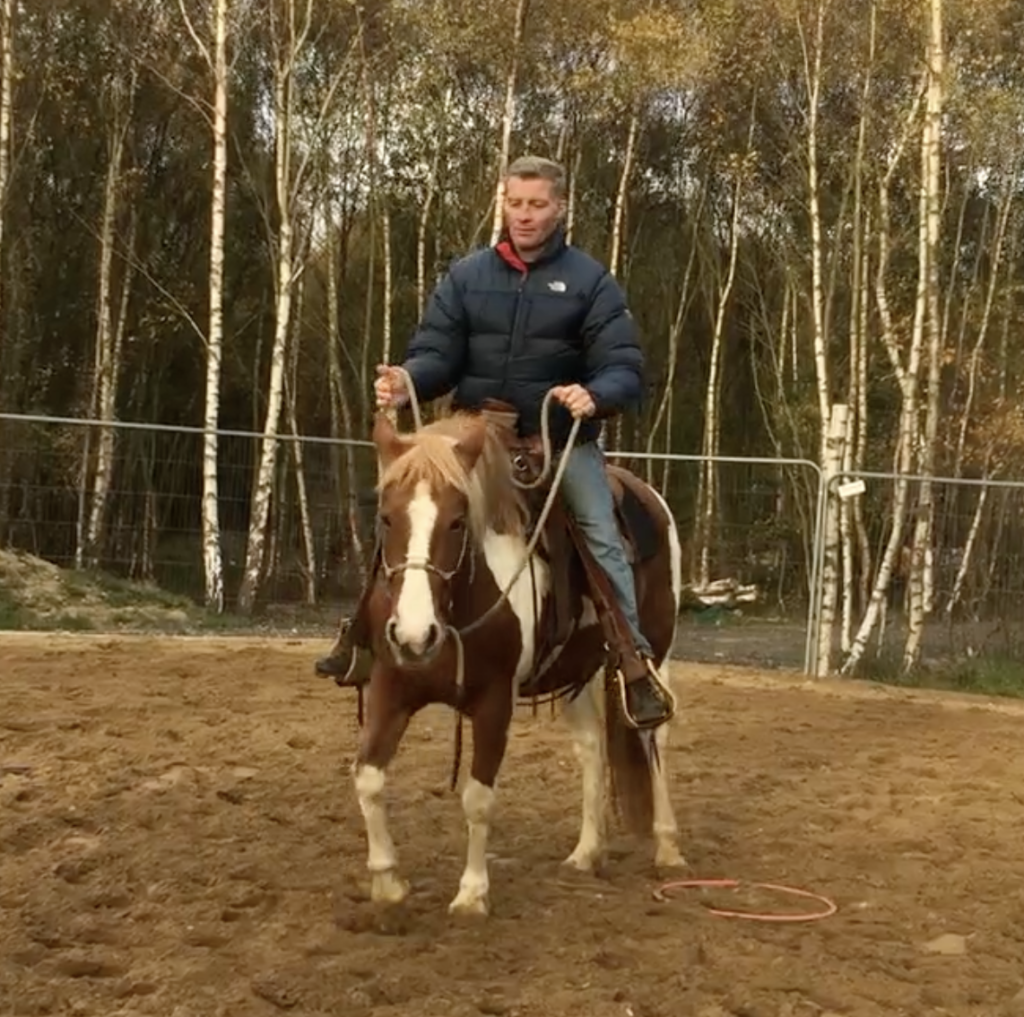
Phil Gilling shares leadership lessons from the ranches to the workplace
The importance of perspective in leadership
A few years ago, my daughter Jade introduced me to horse training. She is a shepherd in New Zealand and her daily work entails her riding Western style with her team of dogs mustering sheep and cattle in high country – bliss!
Jade introduced me to the concept of ‘natural horsemanship’ – a broad definition that encompasses many methods. Fundamentally, this approach aims to gain understanding from the perspective of the horse. Hopefully you can already see the link to leadership, as Human and Organisational Performance (HOP) seeks to understand the context and reality of work from the worker’s perspective.
It is well known that horses are incredibly intuitive to sensing our emotions. This is because they are prey animals and have very little verbal language besides the occasional whinny and neigh, so they mostly communicate with body language. It’s fascinating to stand watching horses interact; even to the untrained eye, you’ll soon figure out what the pecking order is and when they are annoyed or frustrated. For instance, if you approach a horse and its ears are pinned back beware, you may be in line for a bite or worse!
What are the foundations for good leadership?
Horses will generally try to push their luck and take liberties with you, for instance, crowding you, passing close by, or presenting their rear quarters to place you in the kick zone. These are all examples of a horse trying to ascertain if they can dominate you. See any analogies with certain workers? Horses, like people, like to be led well. They don’t want to be punished so start out with these fundamentals in mind:
- show guidance
- clarity matters
- be understanding
- always demonstrate a consistent approach
Be wary of weakness
They also do not appreciate being led by people they perceive as weak leaders. Is this any different from us humans? Indeed, horses will continue to dominate you if they do not respect you, especially if they sense a lack of confidence or fear.
So, how do you deal with such behaviour in a horse? You could punish by using a crop or whip, but this is leadership by fear. Consequently, the horse will remain anxious, waiting for the next sting of a crop and will take any opportunity to take advantage. What about workers? How do they respond if every time they make a mistake there is the real possibility of some form of sanction, punishment or warning? They will be in a constant state of fear, and naturally, they will endeavour to hide any mistakes they may have made.
So, how do you deal with a disrespectful horse that is way bigger than you and weighs around half a ton or more? First, using a crop or a crack on the behind with the tip of a lead is the last resort, or ‘sanction’. A more effective way is to show confidence; start with your body language by standing upright, shoulders back, walking towards the horse, try not to back away if it moves towards you. If it does, wave something in its face, ideally a flag on the end of a stick and do this until it backs away. But here is a key point, if you ever feel angry or frustrated, do not train a horse.
Check in with your own emotional state
Your emotions will spill over, and your response will not be contained or appropriate. Again, similar to people, you are unlikely to get a successful outcome by engaging when you are frustrated and angry. And to paraphrase Principle 4 of HOP, you receive high levels of performance based largely on how you treat others.
With a background of 30+ years in the military, I learned that even if I had to deal with more experienced people who liked to dominate others, I would attempt to hide any inner fear and act confidently and speak clearly and with conviction. But just as importantly, I would also try to seek understanding and attempt to gain an insight of their perspective by asking open questions. Such conversations would reveal their ‘Work As Done’; in other words, this approach would invariably reveal a ‘golden nugget’ insight into their reality! Once I had such an insight, I had more constructive conversations where we would collaborate on solutions.
Common patterns in leaders
But now, onto one of the best lessons I learnt from horse training that is wholly suited to the human environment. Traditionally, if the horse is not doing what you want it to, you raise the ante with more assertion. If you keep doing this and get the same results, it is likely you are not being clear or sending mixed messages. With practice, you can sense the difference between reluctance or laziness, and a misunderstanding. If you keep increasing the ‘volume’ and are not getting what you want, you’re probably sending the wrong message. Again, how true is this when dealing with people?
How often have you felt like saying “Are these people stupid, why can’t they understand simple instructions?” The chances are you’re probably sending an unclear message that, of course, makes sense to you, but not the recipients. If you find yourself saying such things, try to imagine their context, experience, perspective, and work reality. Rather than transmitting a ‘tell’, it is more effective to begin by asking open, non-judgemental questions such as “Can anybody spot any problems with this plan?“ Or “I’m interested to know your thoughts on how you would tackle this issue?”
Of course, being assertive and firm with a horse is more straightforward and arguably quicker, but this approach does not deliver enduring results. This approach is akin to ‘fixing the worker’ when things go wrong, rather than looking at the influencing factors from above.
Reaping the rewards of a consistent and fair leadership approach
But isn’t it far more rewarding when you put in the time to have a consistent and fair approach that sets clear boundaries, with respect, and demonstrates that you genuinely care? This approach builds mutual respect and trust, allowing you to overcome team difficulties. Sorry, I’ve now lost track of if I’m talking about horses or humans…
One indication that you are building an effective relationship with a horse is when it wanders over to you for attention and responds to riding or ground training with just the lightest touch or small directions. You know you are on the right track as a leader when people approach you and are happy to share problems, issues, and ideas or simply want to come over for a scratch. Or have I mixed them up again?!
Phil is our Director of Learning and Development. Prior to joining, he gained experience in leadership, training, human factors, coaching and managing critical risks during a 32-year Royal Air Force career. He’s had the privilege of working with high-performing teams (and now horses), understanding the traits and dynamics that enhance performance.
Phil is also a speaker on Leadership of High Performing Teams and how to motivate and inspire people, read more and connect with Phil here
 English (UK)
 English
