


CEO, Teresa Mullen, shares her insights on Organisational Drift and Its Impact on Procurement Policies and Processes in Large Organisations
One of the most common themes from our ‘Organisational Drift’ conversations in 2024 was related to procurement practices, particularly in large, complex organisations where purchasing materials and goods or securing the services of specialist supply-chain partners can be perceived by those at the sharp end of the business as overly bureaucratic, time consuming, project delaying and sometimes unfair. We met many exasperated project managers and front-line supervisors from a wide-variety of industries all over the world who were frustrated with the procurement policies and processes of their respective organisations and who were more than happy to share their experiences of how and why they circumnavigate the process to get the job done!
In large organisations, keeping strategy and day-to-day operations aligned is a constant battle. While organisational drift is often seen as a silent disruptor, it can also bring unexpected benefits. It’s that gradual, almost imperceptible deviation from the policies and processes that were designed to keep everything running smoothly. For procurement functions, this can mean compromised cost efficiency, regulatory breaches, or reduced effectiveness, however it can also mean discovering innovative ways to adapt to changing realities, fostering creativity, or enabling faster decision-making. Leaders who understand the dual nature of organisational drift can leverage its potential benefits while mitigating its risks to build a more resilient and strategically aligned organisation.
What is Organisational Drift?
Below is a visual representation of Organisational Drift based on Sidney Dekker’s Model:
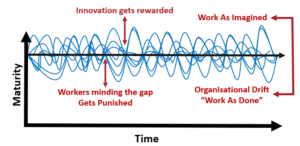
Organisational drift occurs when an organisation gradually deviates from its core policies, processes, or objectives, often without explicit intent. This drift may arise due to changing external conditions, internal pressures, or a lack of oversight. Unlike deliberate strategic pivots, organisational drift is typically unplanned and can lead to inefficiencies, inconsistencies, and even systemic risks if left unaddressed. In our work we typically talk about and explore drift at three ‘organisational’ levels – the Enterprise level, the Leadership level and the Task level and our experience tells us that some of the most susceptible business processes are those related to procurement and supply chain management and that drift occurs at all three organisational levels with alarming frequency.
Organisational Drift in Procurement
Procurement policies and processes are designed to ensure standardised practices, ethical sourcing, regulatory compliance, and cost efficiency.
However, the following factors often contribute to drift in this domain:
1. Complexity of Procurement Systems: Large organisations often have intricate procurement systems involving multiple departments, stakeholders, and vendors. Over time, the need to accommodate various interests can lead to ad-hoc adjustments, creating inconsistencies in the application of procurement policies.
2. Evolving Market Dynamics: Rapid changes in supplier markets, global supply chains, and technology can make existing procurement processes appear outdated. Without proactive updates, employees may resort to workarounds that deviate from established protocols.
3. Decentralised Decision-Making: In large organisations, procurement responsibilities are often distributed across departments or regions. This decentralisation can lead to fragmented practices, with local teams developing their own methods that may conflict with corporate policies.
4. Cultural Factors: Organisational culture can also play a role. For instance, if a culture of “getting things done” is prioritised over adherence to formal processes, employees may sidestep policies to expedite purchases. Examples include:
- Splitting Purchases: Employees break large purchases into smaller orders to stay below approval thresholds, bypassing oversight requirements.
- Direct Vendor Engagement: Rather than going through the approved procurement process, individuals directly negotiate with vendors for faster results, often leading to inconsistencies.
- Using Personal Credit Cards: Employees make purchases using personal credit cards and later seek reimbursement, bypassing official procurement channels.
- Leveraging Existing Relationships: Some employees may rely on unapproved vendors or “friendly” suppliers, citing convenience or prior relationships, which undermines competitive sourcing.
Fire-fighting often leads to procurement policy drift
Do only bad people ‘drift’?
Your best people are actually the ones most likely to find work-arounds and shortcuts when the pressure is on so no, drift isn’t just for the bad actors in your organisation. Typically individual performance is measured based on outcomes, did we get the job completed on time? Did the goods get delivered on time? Were they to the required quality standards? Was the customer happy? These are the things that we tend to focus on as Leaders, rather than wondering how many rules were bent or broken in order to achieve this success! Drift isn’t good or bad, it just is. In fact most of the time we benefit from drift, it brings innovation, learning and efficiencies and so we shouldn’t be looking to remove it from our tasks and activities by simply telling everyone to ‘just follow the darned rules!’ The risk of doing this is that no work gets done at all!
Consequences of Procurement Drift
There are however some areas of our operation where strict control and adherence to company policies is absolutely crucial and procurement is one such area. Unchecked organisational drift in procurement can have far-reaching consequences, including legal, moral, and ethical implications:
Legal Consequences: Deviating from procurement policies can lead to breaches of contract, non-compliance with regulatory requirements, and exposure to lawsuits. For instance, unauthorised vendor engagements might violate anti-corruption laws or industry-specific procurement regulations. Such breaches can result in hefty fines, legal disputes, and damage to the organisation’s reputation.
Moral Implications: Procurement drift often undermines the principles of fairness and transparency. Favouring unapproved vendors or bypassing competitive bidding processes can erode trust among stakeholders, both internal and external. Employees may also perceive a lack of accountability, which can negatively affect organisational morale.
Ethical Concerns: Ethical risks are heightened when procurement drift involves questionable practices such as nepotism, favouritism, or engaging with vendors known for unethical behaviour. Organisations may inadvertently support exploitative labour practices or environmentally damaging operations by circumventing approved sourcing guidelines.
Strategies to Address Organisational Drift
To mitigate the risks associated with organisational drift in procurement, large organisations can adopt several proactive measures:
Regular Policy Reviews: Periodically reviewing and updating procurement policies ensures alignment with evolving business needs and external market conditions.
Enhanced Training and Communication: Providing comprehensive training and clear communication about procurement policies helps employees understand their importance and adhere to them.
Centralised Oversight with Local Flexibility: Establishing a centralised procurement function with room for localised adaptations can balance standardisation with flexibility.
Leveraging Technology: Implementing robust procurement management systems can automate compliance, track adherence to policies, and provide visibility into procurement activities across the organisation.
Continuous Monitoring and Feedback: Regular audits and feedback mechanisms can help identify early signs of drift and enable corrective action.
Conclusion
Organisational drift is happening right now across every part of your business and although in the majority of cases you will be benefitting from it, it can also be an inherent risk in large organisations and its impact on procurement policies and processes can be particularly damaging. The legal, moral, and ethical consequences of such drift underline the importance of proactive management. By recognising the signs of drift and implementing targeted strategies to address its root causes, leaders can safeguard the integrity and effectiveness of their procurement functions. Ultimately, a commitment to continuous improvement and strategic alignment will enable organisations to navigate the complexities of modern procurement while maintaining resilience and competitive advantage.
]
Teresa Mullen is the CEO of G.R.I.T. and a Passionate Organisational and Operational Learning Consultant, Key Note Speaker and Executive Coach
If you would like to learn more or explore how organisational drift is affecting your organisation right now please get in touch, [email protected]
 English
  English (UK)